
What Does a Commissioning Engineer Typically Do?
They systematically test and validate installed systems against design specifications. This is distinct from installation (putting equipment in place) and maintenance (keeping it running). Commissioning sits between the two.
- Reviewing installation documentation against as-built conditions
- Performing functional testing of individual components
- Running integrated system tests
- Calibrating instruments and verifying control system logic
- Documenting test results and producing commissioning reports
- Supporting the handover process to operations teams
Complexity varies enormously. A single conveyor line might take a couple of days. An entire pharmaceutical production facility could take months with a team of specialists.
When to Start Looking
The common pitfall is engaging too late. Involve a commissioning engineer during design review rather than after installation, because an experienced one catches design issues early.
Smaller projects
4 to 6 weeks
Minimum lead time before the planned commissioning start date.
Large multi-system installations
3 to 6 months
Lead time for sourcing and onboarding the right people.
How FindFST Helps You Find the Right Engineer
Post your requirements, let the platform match you, and review profiles before committing.
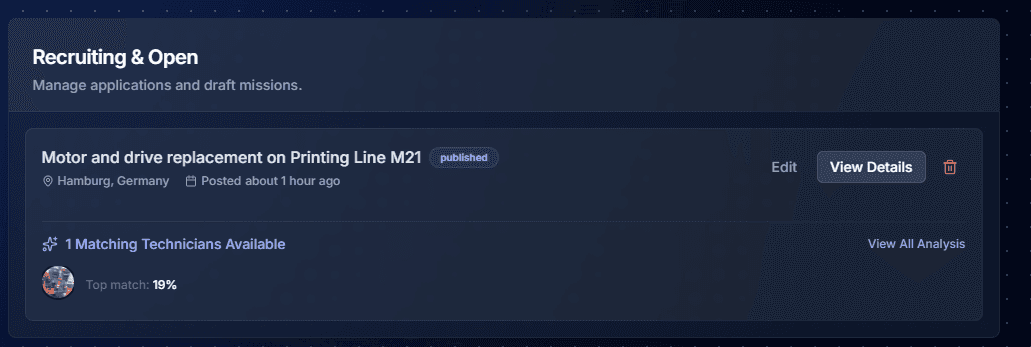
1. Post your mission
- Describe the systems to be commissioned
- State location, timeline and any certifications required
- The mission goes live and matching engineers are identified automatically
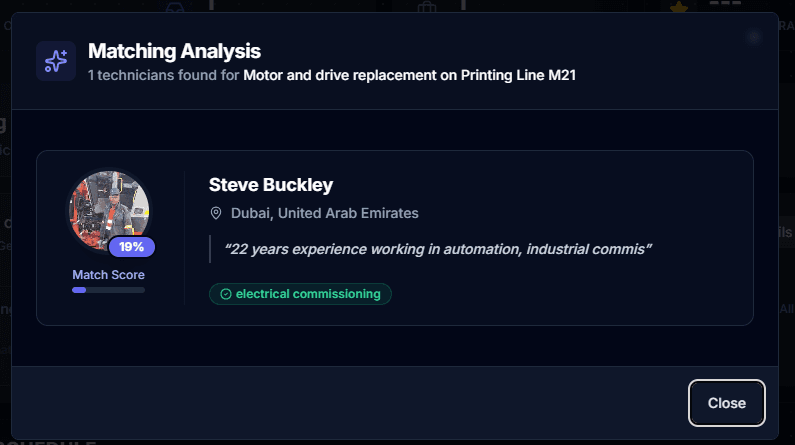
2. Review matching analysis
- Profiles scored against your mission requirements
- See at a glance who has the right skills and certifications
- Experience for your specific project, not a generic list
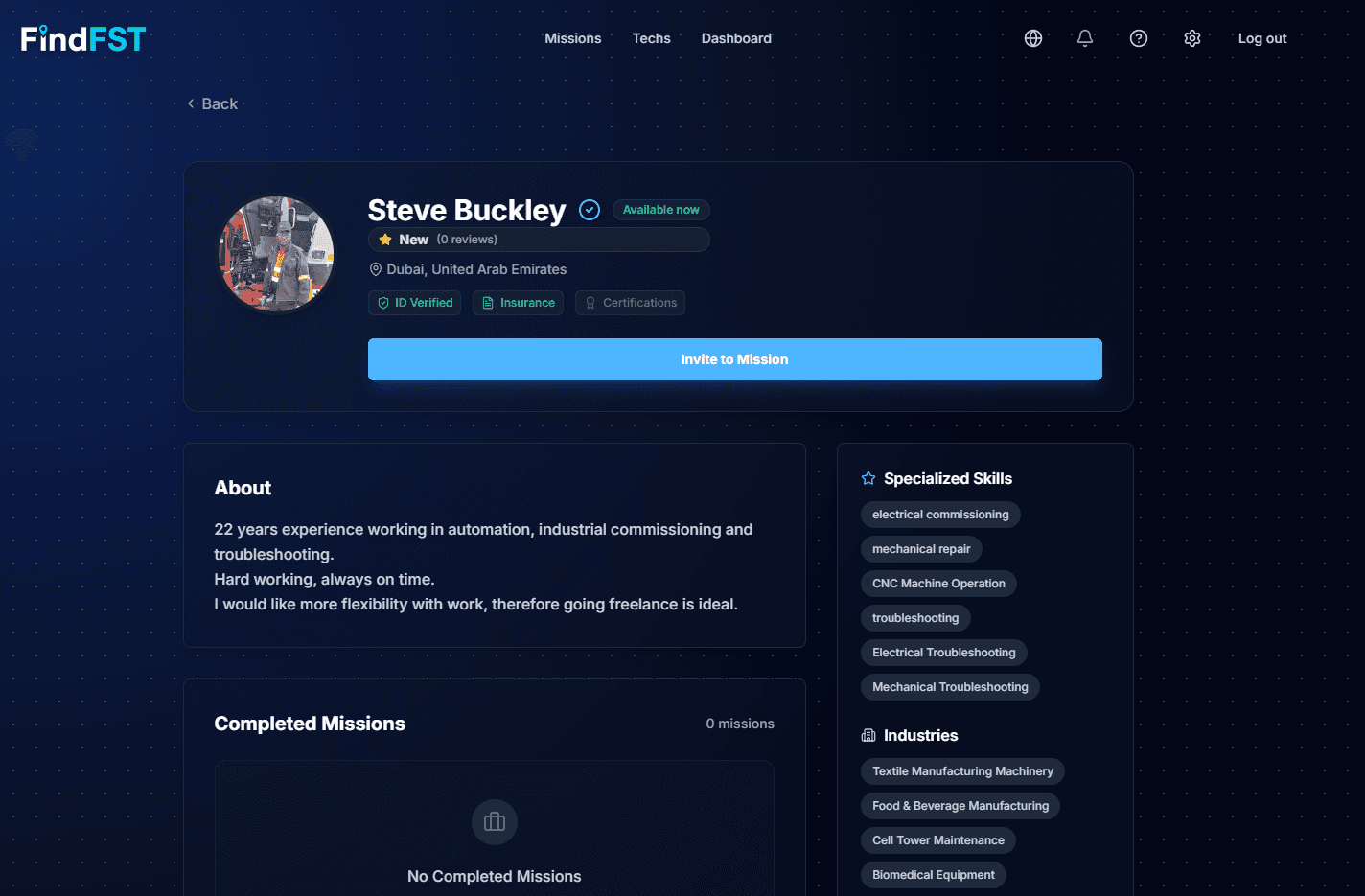
3. Review full profiles
- Skills, certifications and industry specialisations
- Completed missions and ratings from previous clients
- You see exactly who you are hiring before you commit
Qualifications Worth Looking For
Industry-specific experience
- Requirements differ substantially between sectors
- An HVAC commissioning engineer may not suit a chemical processing plant
- Pharma, food and beverage, automotive, energy and heavy industry each have their own frameworks
Equipment familiarity
- Experience with your specific control systems and instrumentation brands
- An engineer who knows your PLC platform works more efficiently
Relevant certifications
- CompEx or ATEX certification for hazardous areas
- SIL competency for safety instrumented systems
- GAMP experience for pharmaceutical environments
- Requirements vary by industry and jurisdiction
Documentation quality
- Ask to see sample commissioning reports from previous projects
- Clear, thorough documentation separates experienced engineers from the rest
Language capability
- For cross-border work, confirm they can communicate with your site teams
- And produce documentation in your required language
Contract Structure and Pricing
- Daily rates vary widely by country, specialisation and project complexity
- Most commissioning is billed time-and-materials, given uncertain testing timelines
- Fixed-price is sometimes possible for well-defined scopes
Cover these in the contract
- Scope of systems to be commissioned, and acceptance criteria
- Deliverables and documentation requirements
- Responsibility for test equipment and utilities
- Terms for schedule extensions and travel arrangements
See our rate guide for indicative ranges by country.
Potential Warning Signs
Exercise caution with commissioning engineers who:
- Cannot provide references from similar projects
- Are reluctant to share sample documentation
- Quote significantly below the going market rate
- Cannot clearly explain their commissioning methodology
- Are unavailable for the pre-commissioning review phase
Disclaimer: This guide is provided for general informational purposes only and does not constitute professional, legal, or financial advice. All rates, timelines, and market data referenced are indicative estimates based on general market observations and may not reflect current conditions. Actual costs, qualifications, and regulatory requirements vary by country, industry, and project. Always verify information with relevant local regulations, obtain professional advice where appropriate, and request multiple quotes before committing to any engagement. FindFST accepts no liability for decisions made based on the content of this guide.
Find Commissioning Engineers on FindFST
Post your project requirements, specify the systems and certifications you need, and receive quotes from qualified engineers worldwide. Every technician on FindFST is identity-verified.
Hire industrial field service technicians directly. No agency markup, no hidden fees. Just a flat 6% platform fee.