
The Major PLC Platforms in European Industry
Europe's industrial automation landscape is generally dominated by a handful of PLC families, each with distinct programming environments and regional adoption patterns. Knowing which platform your facility runs is typically the most important factor when selecting the right field service technician for the job.
Platform adoption varies by facility. This table reflects general trends and may not match every market or use case.
How It Works on FindFST
Finding the right PLC programmer takes three steps. Here's what the process looks like on the platform.
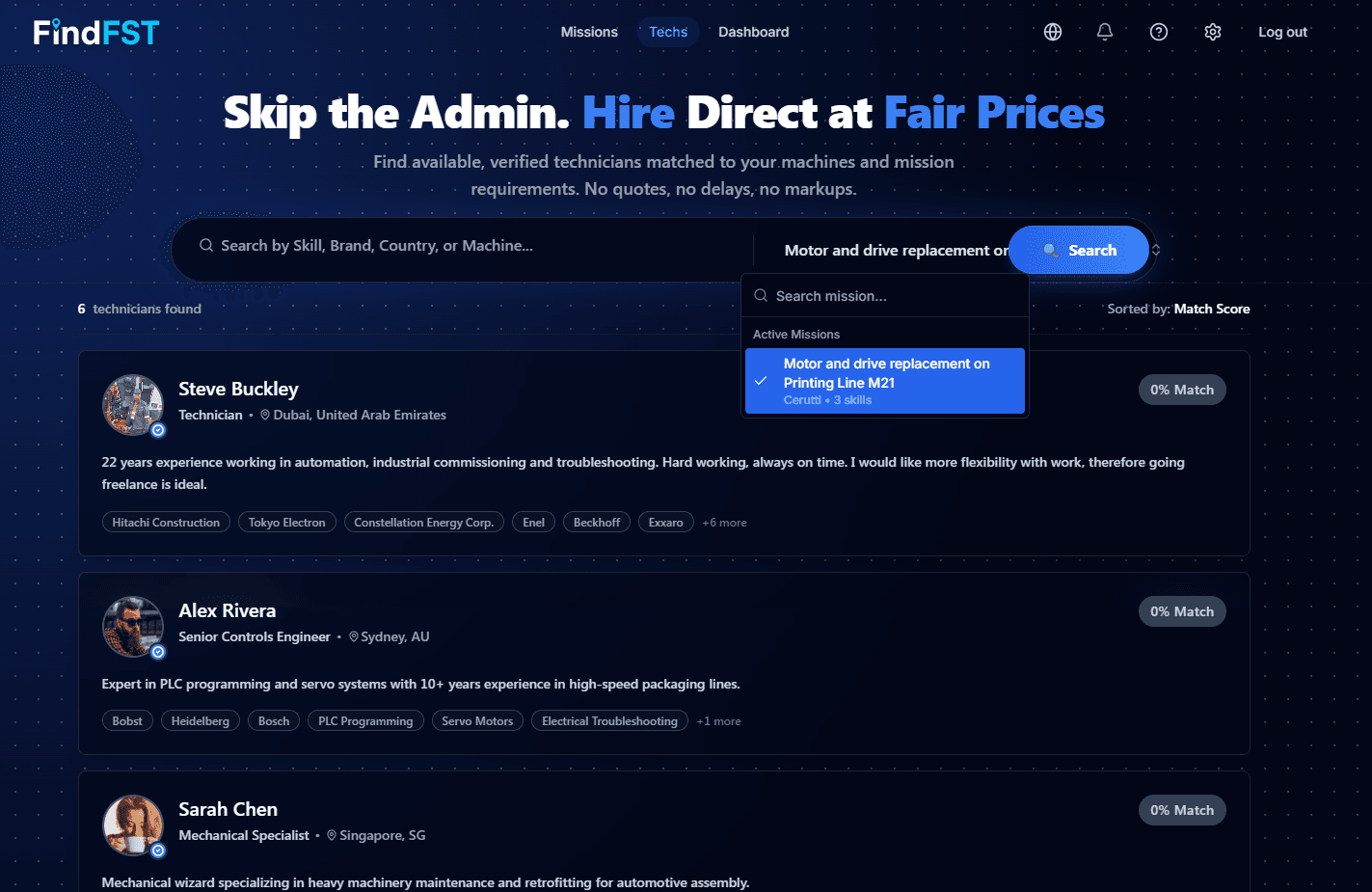
Step 1: Search by Skill, Brand, or Location
Filter technicians by PLC platform (Siemens, Rockwell, Schneider), industry experience, country, and availability. Results are matched to your specific requirements—not a generic list.
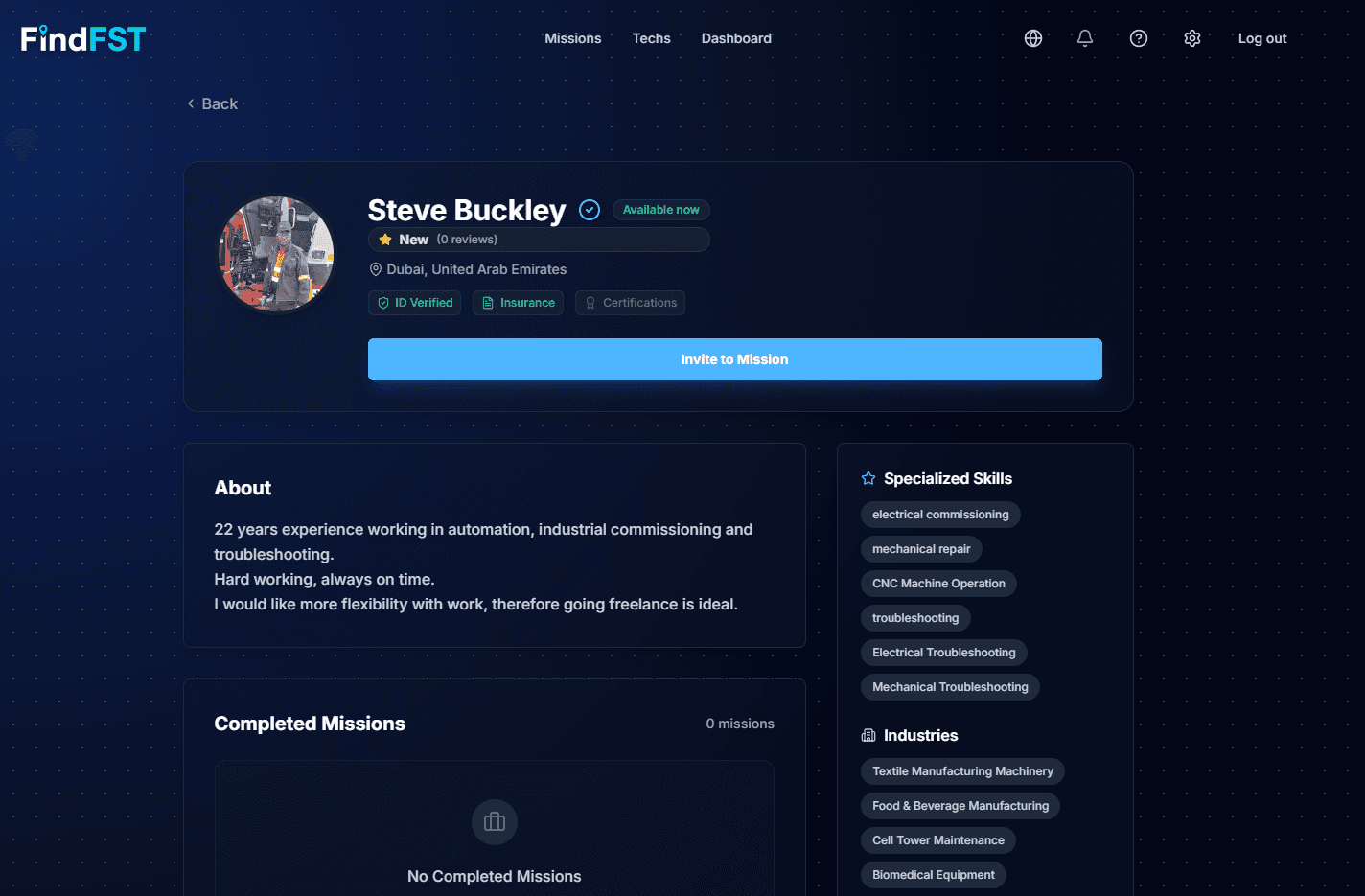
Step 2: Review Profiles and Qualifications
Each technician profile shows their skills, certifications, industry experience, completed missions, and ratings. You see exactly who you're hiring before you commit—no guessing.
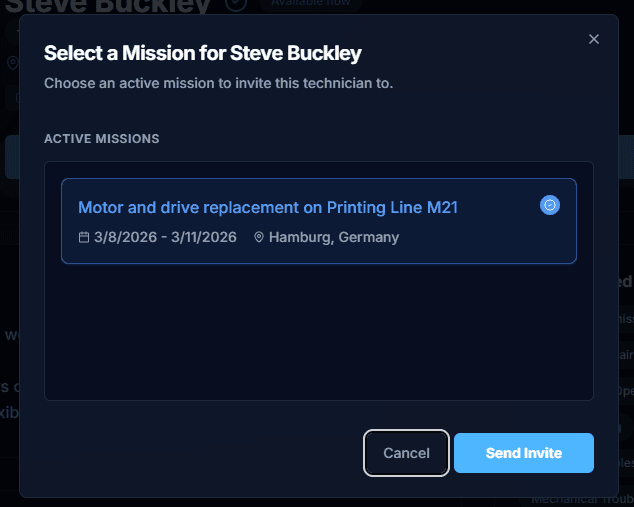
Step 3: Send an Invite to Your Mission
Found the right fit? Invite them directly to your mission. The technician sees the full brief, submits their quote, and you agree on terms—no middleman, no agency markup.
PLC Programming vs. PLC Maintenance: Know What You're Hiring For
These are generally considered different skill sets.
PLC Maintenance
- Diagnosing faults in existing programs
- Replacing hardware
- Backing up and restoring programs
- Monitoring system health
PLC Programming
- Writing new control logic
- Modifying existing programs
- Integrating new equipment
- Developing HMI screens
- Configuring communication protocols
A maintenance technician can usually keep your existing system running. A programmer can change what it does. Making sure your job brief reflects which one you actually need can save time on both sides.
What to Include in Your Brief
The quality of applications you receive often depends on how clearly you describe the work. A strong brief might specify:
- The exact PLC model and firmware version
- The programming software and version required
- Whether backup copies of the existing program are available
- The physical process being controlled
- What change is needed and why
- Any safety systems involved
- Relevant network architecture and required documentation deliverables
A vague brief tends to attract generic responses. A specific brief is more likely to reach the right specialist and produce more accurate quotes.
Qualifications and Experience to Consider
Manufacturer Certifications
Certifications from Siemens, Rockwell, and other manufacturers confirm formal training. They are generally worth asking about, though hands-on project experience is often equally or more important.
Industry-Specific Experience
A PLC programmer with years in pharmaceutical manufacturing is likely to understand validation requirements and batch record integrity. One from automotive may be stronger on cycle time optimisation and robot integration. This domain knowledge can be as valuable as raw programming skill.
- Pharma background: validation requirements and batch record integrity
- Automotive background: cycle time optimisation and robot integration
- Domain knowledge can be as valuable as raw programming skill
Safety PLC Competence
If your facility uses safety-rated PLC functions, the programmer should ideally have specific experience with safety-rated programming. This is generally considered important for both liability and safety reasons.
Communication Protocol Experience
Modern industrial networks may use PROFINET, EtherNet/IP, Modbus TCP, OPC UA, and others. For jobs involving system integration across manufacturers, network integration experience can be important beyond basic programming skills.
- PROFINET, EtherNet/IP, Modbus TCP, OPC UA and others
- Integration across manufacturers needs more than programming skill
- Ask about network integration experience explicitly
Typical Timelines
Simple modifications to existing programs including testing
Adding a new station or migrating within the same PLC family
Full line programming or cross-platform migrations
Building in commissioning and testing time after programming is generally advisable. Code that compiles perfectly may still need tuning once the physical process is running.
Disclaimer: This guide is provided for general informational purposes only and does not constitute professional, legal, or financial advice. All rates, timelines, and market data referenced are indicative estimates based on general market observations and may not reflect current conditions. Actual costs, qualifications, and regulatory requirements vary by country, industry, and project. Always verify information with relevant local regulations, obtain professional advice where appropriate, and request multiple quotes before committing to any engagement. FindFST accepts no liability for decisions made based on the content of this guide.
Find Industrial PLC Programmers on FindFST
Our PLC programmers work on factory floors, production lines, and processing plants worldwide. Search by PLC platform, industry experience, and location to find the right specialist.
No agencies, no middlemen. Just a flat 6% platform fee, and the technician keeps 100% of their quoted rate.